At North Port Blooms, one of the most reliable ways to multiply plants is through geranium propagation from cuttings. This method allows a single healthy plant to become multiple new plants using simple backyard techniques.
In this guide, I’ll walk through exactly how I propagate geraniums using stem cuttings, node placement, rooting hormone, and humidity control to produce strong, rooted plants.
🌱 Why Geranium Propagation Works So Well
Geraniums are highly responsive to vegetative propagation because they naturally produce strong nodes along their stems. This makes them ideal for:
- Rapid plant multiplication
- Backyard nursery production
- Preserving plant quality genetics
- Cost-effective plant expansion
Instead of starting from seed, cuttings allow you to replicate mature plants faster.
✂️ Step 1: Selecting a Mother Plant
Choose a healthy geranium that is:
- Actively growing
- Free of pests or disease
- Producing multiple stems
Strong mother plants determine the success of your cuttings.
🌿 Step 2: Taking and Preparing Cuttings
Using clean pruners:
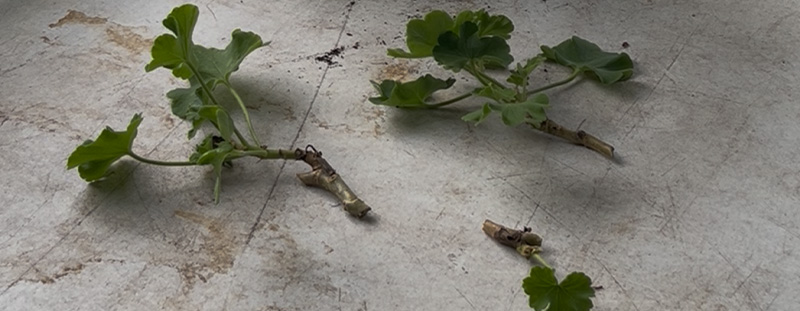
- Cut a healthy stem from the plant
- Divide it into smaller sections
- Ensure each cutting contains multiple nodes
Nodes are essential growth points where roots and leaves form.
🌱 Step 3: Understanding Node Placement
For best results:
- Aim for multiple nodes per cutting
- Ideally: 2 nodes below soil and 2 above soil
This improves rooting success and plant stability after transplant.
🪴 Step 4: Prepping the Cutting
Before planting:
- Apply rooting hormone to encourage faster root formation
- Remove excess lower leaves
- Allow cut ends to rest briefly (optional callousing)
🌿 Step 5: Planting the Cuttings
Each cutting is placed into a prepared pot:
- One cutting per container for best root development
- Deep enough to cover lower nodes
- Firm soil around stem for support
💧 Step 6: Watering and Humidity Control
After planting:
- Water thoroughly to settle soil
- Maintain consistent moisture (not saturated)
To improve success, I use simple humidity domes made from gallon jugs. These:
- Retain moisture
- Reduce transplant stress
- Speed up rooting
🌞 Step 7: Growth and Development
Within 1–3 weeks:
- Roots begin forming
- New leaf growth appears
- Plants establish as independent growers
At this stage, they transition into future “mother plants” for continued propagation cycles.
🌿 Final Thoughts
Geranium propagation is one of the most efficient ways to build plant inventory in a backyard nursery system. With just one plant, you can create multiple generations of new plants using simple, repeatable steps.
This is the exact method used at North Port Blooms to grow rooted, ready-to-plant stock locally in Florida.
🌱 Connect with North Port Blooms
Follow along for more propagation experiments, seasonal plant updates, and backyard nursery builds.